By Dr Marie Longo, Board Member, Graham F Smith Peace Foundation
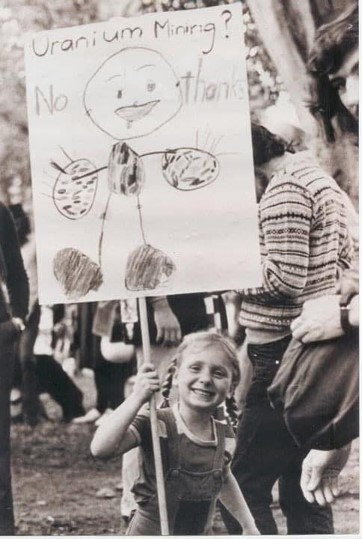
Marie Longo at the Campaign Against nuclear Energy (CANE) , 1979. Marie’s father, Dr Don Longo, is visible on the right.
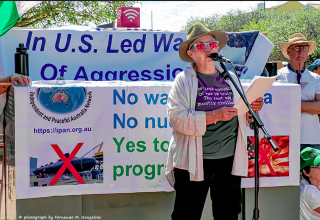
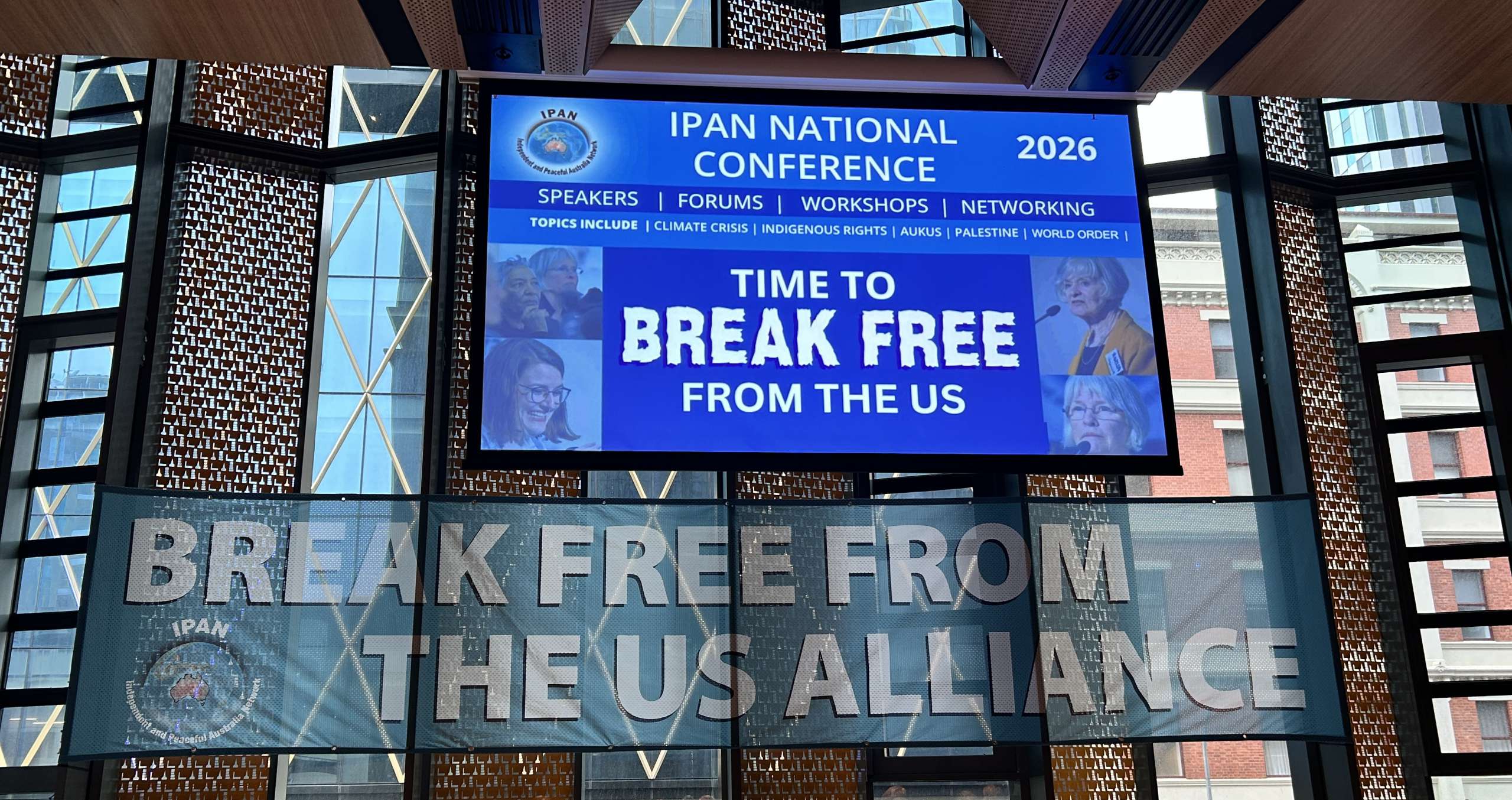
I was fortunate enough to attend the 2026 Independent & Peaceful Australia Network (IPAN) Conference from July 24th-26th in Adelaide. IPAN was formed in 2011 and has over 100 affiliate partners including community and church groups, trade unions, and peace and anti-war organisations. It is a national network that coordinates and connects people striving for peace and independence.
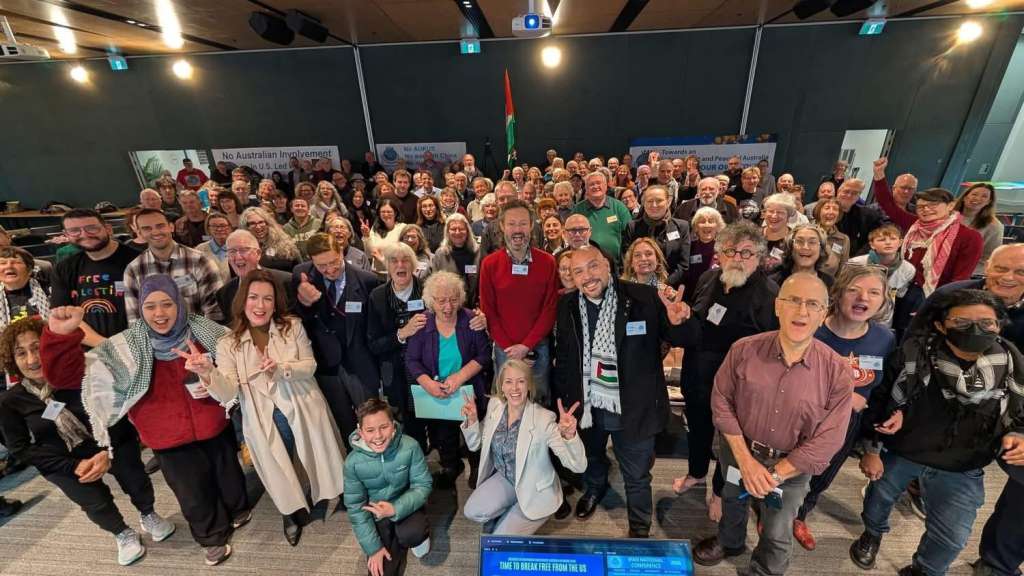
The conference was titled ‘Time to break free from the US’ and had an incredible 170 attendees and 30 speakers. The passion and positivity in the room was like nothing I’ve experienced before at a conference. Yes, there was anger. Yes, there was frustration. But these feelings served to motivate and inspire, and there was also a lot of hope and determination.
The speakers were thought-provoking and terrifyingly honest in their appraisal of the state of the world today. The conference began with confronting and disturbing accounts of the US’ impact on the globe: environmentally, geopolitically, socio-culturally and morally; providing us with a landscape with which to view where Australia sits, and the subsequent impacts of our alliance.
Kellie Tranter, an Australian lawyer, human rights activist and IPAN patron, spoke about the strategic tools used by those who want to control us. We are told that we are different from other races and cultures, but this is a lie designed to keep us divided and distracted; scared and submissive. We all want shelter, safety, security and sanctuary and a lot more unites us than separates us.
Abby Martin, an American journalist, activist and filmmaker has just released a powerful documentary called ‘Earth’s Greatest Enemy’, which lays out the environmental impact of the US military and its endless unjustified and duplicitous wars. In spite of the horrors depicted in Abby’s film, she emphasises that sustained activism, community strength and tenacity are paramount, and that ordinary people can make a difference and change history. This epitomises the objectives of the Graham F Smith Peace Foundation, which showcases ordinary people taking extraordinary actions to make a better world and inspire others.
After Kellie, Abby and other speakers set the scene, we were presented with very interesting and enlightening statistics by Dr Rodrigo Acuña, a Latin American affairs specialist and filmmaker. He summarised data from the 2026 Lowy Institute Poll of 2,013 Australians, which gives a snapshot of public opinion on foreign policy and global affairs. The survey highlighted record lows in trust for the US, high economic anxiety, and shifting views on international alliances. Trust in the US to act responsibly dropped to 31%, a significant decrease from 56% in 2024, with confidence in President Trump at just 21%. Over half (53%) of Australians reported feeling unsafe in the world, a record high for the survey and higher than in 2020 (50%). Worryingly, questions about societal attitudes indicated a significant decrease in positive views about cultural diversity: 73% compared with 90% in 2024.
Another source of data was presented by Emma Shortis, Director of The Australia Institute’s International & Security Affairs Program. The2026YouGov Poll of 1,502 Australians found that more than twice as many believed our interests are better served by a more independent foreign policy (59%) than a closer alliance with the US (23%). Damningly, 52% of Australians believed that President Trump is a greater threat to world peace than Vladmir Putin (17%) or Xi Jinping (16%); a significant increase from 31% in 2025 (27% each for Putin and Xi). As Emma concluded: this poll represents a seismic shift in the way Australians think about the United States.
At this point of the conference I felt quite pessimistic, but we quickly moved on to a proactive approach: what we can do and how. We heard different campaign approaches providing practical information and strategies to effect change and ‘chart our own course’. In preparation for Day 2 (the day of action), there were interactive and lively discussions about how to create new paths, as well as following in the footsteps of activists past and present. I was particularly lifted by younger speakers’ acknowledgment of the work done by older generations: we see you and we appreciate you; highlighting not only past contributions but giving hope for the future.
We then attended workshops looking at different campaign approaches and focusing on skill-building; I chose communication, mainstream and social media as I have a Gen Z teenager who uses those platforms. I asked for her main source of news and she was said it was TikTok, but she knows that it isn’t credible so she does further research on her own using legitimate government or independent websites, or asks her most credible source, her mum (that’s a gold star parenting moment right there😊)! I also asked her for three things we could do to positively impact our future: stop looking to the US all the time; stop using AI for everything; and get off our phones more and connect in person.
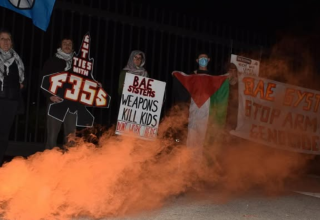
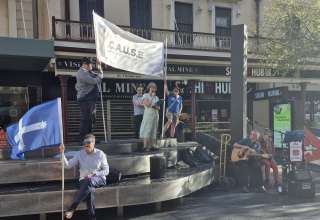
Day 2 began with a range of speakers sharing their campaigns. The broad themes included a nuclear- and war-free world; freeing Palestine; climate action; and education1. Bevan Ramsden, a long-time member of IPAN and an incredible activist and educator, who sadly passed away the day after the conference, summed it up so well: things are not going to change unless we do something about it. Don’t sit on the sidelines. Become involved. And as Natasha Watt, Deputy President of the NSW Teachers Federation so succinctly put it: peace is everyone’s business.
We then broke into small groups to think about ways to build the movement for independence and peace. It was a wonderful opportunity to meet like-minded people and hear their stories. We started with the common goals uniting us, and a word cloud was produced on the screens in front. These included goals such as peace; reconciliation; social justice; and environmental sustainability. We also discussed common obstacles to overcome, some of which are created deliberately by the structures who seek to oppress us. This included communication; combatting mis and disinformation; the importance of the messenger not just the message (which circles back to engaging young people and marginalised groups); as well as psychosocial obstacles such as fear, indifference and apathy. There was a consensus on the need for action, and collaboration and cooperation between groups. Our strength comes from our diversity and acknowledging our differences: working with them not against them, and the best way to achieve this is to build an inclusive, broad-based movement.
The conference concluded with developing proposals for the movement to create an independent, peaceful and sustainable Australia. These included focusing on First Nations people and reconciliation, social justice and the environment and engaging with young people. These proposals were action and movement-building oriented, and we were reminded not to discount solidarity and connection…and as one speaker said: sometimes you just need to dance together!
I will finish by quoting Julian Assange: if war can be started by lies, peace can be started by truth.
1 Note that the formal Conference Declaration will be made available on the IPAN website (at the time of writing, it was not yet available).
2 Port Adelaide Community Opposing AUKUS (Eileen Darley); Stop AUKUS WA (Juanita Doorey); Labor Against War (Hamish Macpherson); Wollongong Against War and Nukes (Alexander Brown); Medical Association for the Prevention of War (Margie Beavis); International Campaign to Abolish Nuclear Weapons; AUKUS Public Inquiry (Jonathan Pilbrow); Rising Tide (Leena Sudano); NSW Teachers Federation (Natasha Watt); Australian Nuclear Free Alliance (Jim Green); Australian Friends of Palestine (Mike Khizam); Teachers for Palestine (Nigel Gramp); Extinction Rebellion (Anna Slynn); Palestine Flotilla Experience (Ethan Floyd); Pine Gap Convergence (Nathalie Farah); Wage Peace (Merryn Johnston).